top of page
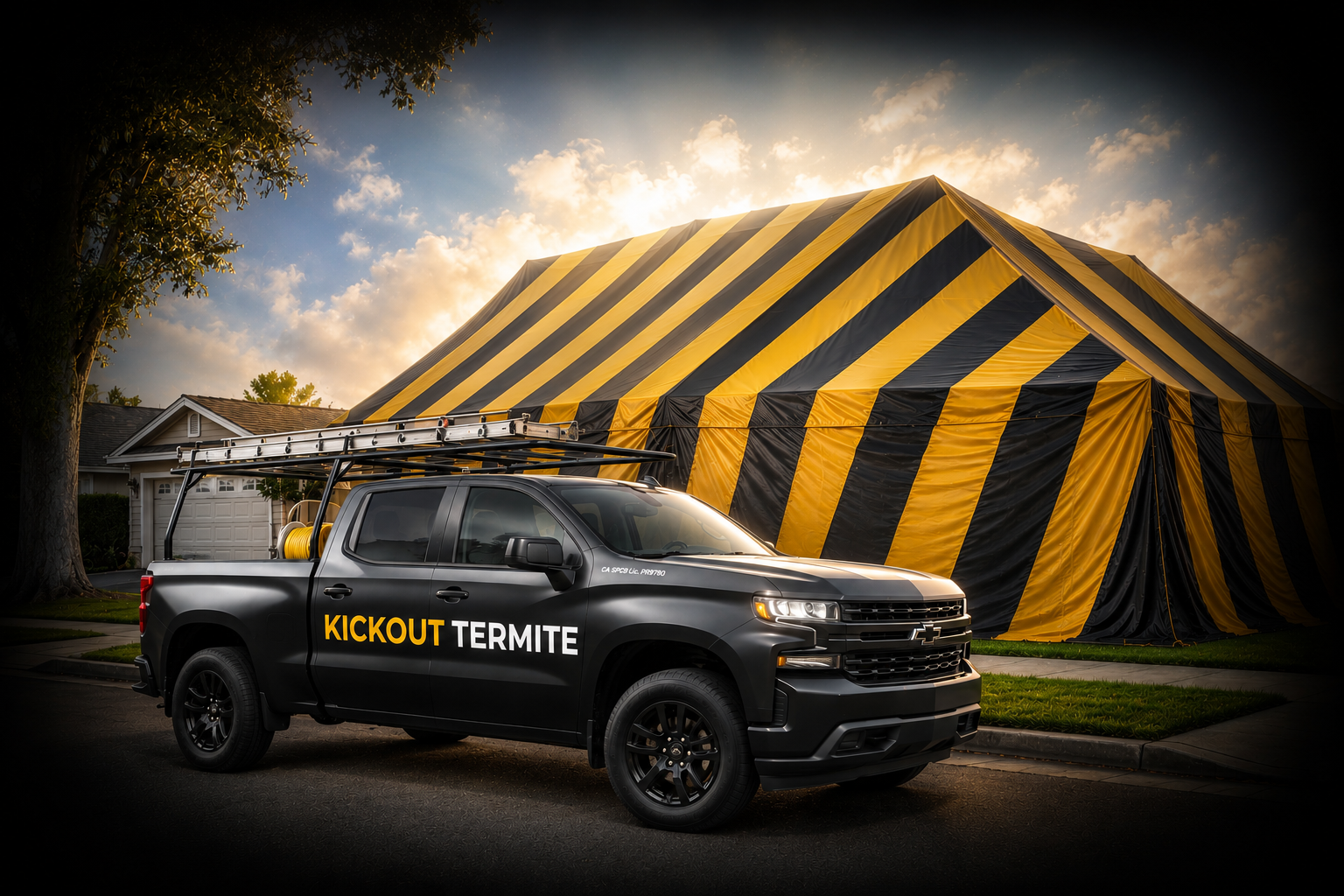
Fumigation
Preparation Guide
Simple. Clear. Step-By-Step
If you need these instructions in another format or have further questions about preparation, please contact us before your scheduled fumigation date.
Watch this short video to learn what happens during a fumigation.
Frequently Asked Questions
Fumigation Costs & Effectiveness
Preparation Safety & Reentry
Property Protection Warranties & Scheduling
The cost of termite fumigation depends on several factors, including the size of the structure, construction type, accessibility, and treatment requirements. Larger homes, complex rooflines, and difficult access may increase the cost. Kickout Termite provides property-specific fumigation estimates following an inspection, so homeowners understand the recommended treatment and associated costs before scheduling.
Most residential fumigations coordinated by Kickout Termite take approximately three days and two nights.Day 1: Tent installation and fumigant application.Day 2: Aeration begins according to the fumigator's procedures.Day 3: Tent removal, final clearance testing, and authorization for reentry.The schedule may vary depending on structure size, weather, treatment conditions, and clearance requirements. Occupants cannot return until the licensed fumigator officially clears the structure.
Not every termite infestation requires whole-structure fumigation. Localized treatments can be effective when drywood termite infestations are accessible and sufficiently confined. However, when evidence suggests widespread activity or infestations extending into inaccessible areas, fumigation may be recommended.Unlike localized treatments, whole-structure fumigation reaches both visible and hidden drywood termite infestations throughout the enclosed structure. The appropriate recommendation depends on inspection findings.
Termite fumigation involves enclosing a structure with specialized tarps and introducing a fumigant gas, such as Vikane® (sulfuryl fluoride).The gas penetrates wood and other structural areas to control drywood termite infestations, including those that may be concealed inside walls, attics, and framing.After treatment, the structure undergoes a required aeration and clearance process. Licensed fumigation professionals verify that the structure meets reentry requirements before occupants are permitted to return.
Properly performed whole-structure fumigation is designed to eliminate drywood termite infestations throughout the enclosed structure, including hidden infestations that localized treatments may not reach.However, fumigation does not control subterranean termite colonies located in the surrounding soil. Subterranean termites generally require separate soil treatments or other appropriate control methods.
Yes. Fumigation is designed to eliminate existing drywood termite infestations, but it does not provide a residual chemical barrier against future infestations.New termite colonies can establish themselves after treatment. Kickout Termite provides a three-year full-structure fumigation warranty against qualifying live drywood termite activity, subject to the terms and limitations of the work authorization.
bottom of page